

Quick answer
The Air Quality Index translates outdoor pollutant concentrations into a common scale of health concern. On the US AQI scale, higher values mean worse air quality.
This guide uses the US AQI shown on SkyAndTime. Other countries may use different scales.
What AQI measures
AQI is an index, not a percentage or a concentration in micrograms. Pollutants are converted to individual index values; the overall value reflects the highest one, rather than adding them together. The leading pollutant can change.
The EPA groups pollutants into particles, ground-level ozone, carbon monoxide, sulfur dioxide, and nitrogen dioxide. Particle pollution includes PM2.5 (fine particles) and PM10 (larger inhalable particles). AQI does not measure every possible contaminant or your personal exposure.
See the six AQI levels and colors
| AQI | Color and category | General meaning |
|---|---|---|
| 0–50 | Green · Good | Low health concern. |
| 51–100 | Yellow · Moderate | Some unusually sensitive people may be affected. |
| 101–150 | Orange · Unhealthy for Sensitive Groups | Sensitive groups face greater concern. |
| 151–200 | Red · Unhealthy | Effects are possible in the general public. |
| 201–300 | Purple · Very Unhealthy | Health alert; increased concern for everyone. |
| 301–500 | Maroon · Hazardous | Emergency-level health concern. |
Values above 500 are beyond the standard scale and remain hazardous. Category names complement the colors so the guide is readable without relying on color alone.
Common misunderstanding
- “AQI 80 means 80% polluted.” It is an index value in the Moderate category, not a percentage.
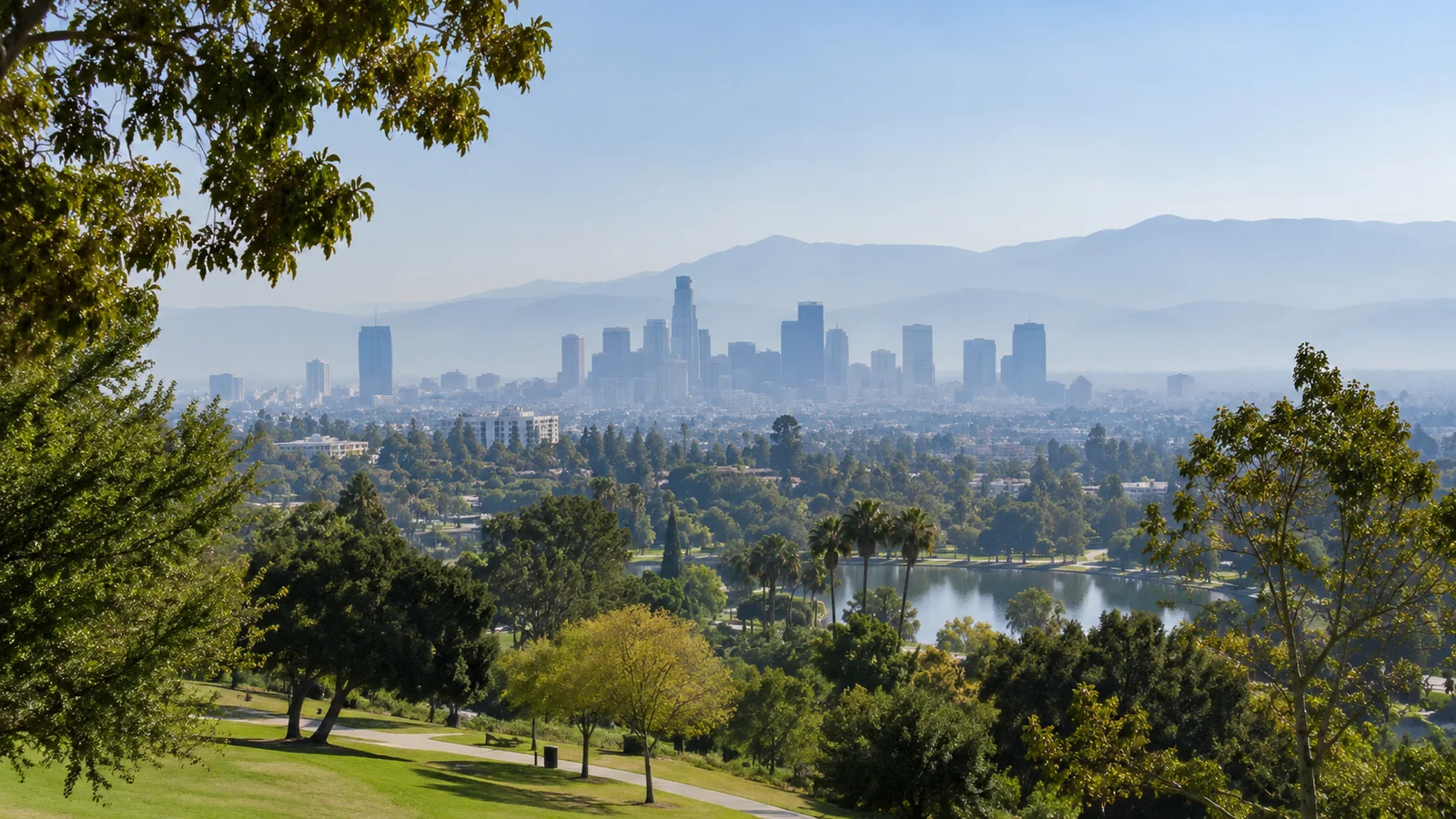
- “A clear view means clean air.” Some pollution is invisible; a photo, smell, or clear skyline cannot replace air-quality information.
A simple planning example
Imagine comparing these three readings before an outdoor workout. Read the category, pollutant, timestamp, and local guidance together; these numbers are examples, not live conditions.

AQI 42 · Good
A lower-concern reading on the US scale. Check that it applies to your location.

AQI 80 · Moderate
Pay attention if you are unusually sensitive to the reported pollutant.

AQI 130 · USG
Sensitive groups should use the local activity guidance to adjust their plans.
Who may be more sensitive?
Sensitivity depends on the pollutant. Particle pollution is a particular concern for people with heart or lung disease, older adults, and children. For ozone, people with asthma or other lung disease and people active outdoors may be more affected. Follow local public-health advice and any personal plan from a clinician.
Why AQI can change during the day
Pollution sources and weather both matter. A useful reading always has a place and a time attached to it.
Sunlight and ozone
Chemical reactions involving other pollutants produce ground-level ozone. Warm, sunny conditions can favor higher levels.
Changing wind
Air arriving from elsewhere can carry pollution, including smoke. A breeze does not always mean cleaner air.
Nearby and distant sources
Traffic, industry, dust, and fires can affect different pollutants. Local conditions may differ from a citywide estimate.
Data and averaging
Models and monitors have different inputs and update schedules. Pollutants also use different averaging periods.
Current AQI versus forecast AQI
Current AQI describes recent conditions or an estimate for the present. A forecast predicts a future period and can change as new information arrives. AirNow’s current NowCast and daily AQI are not identical time averages.
SkyAndTime displays modeled estimates from Open-Meteo/CAMS, not a sensor at your exact address. Read the model timestamp and whether the value is hourly or daily. Compare like-for-like periods, then check your local air-quality agency for official alerts.
How to use an air quality forecast
Plan ahead with the forecast, then check current conditions again before an activity.
Select the right place
Open SkyAndTime Air Quality and confirm your city and the US AQI label.
Match your activity time
Compare the forecast for the hours you expect to be outside. A daily value is not a promise for every hour.
Adjust duration and effort
When pollution is elevated, local guidance may recommend a shorter or less strenuous outing, another time, or indoor alternatives.
Read the wider forecast
Use Weather for heat and other conditions. Cooler air is not automatically cleaner air.
Follow official advice for the category and pollutant, especially during smoke events. The index supports planning; it cannot guarantee an individual’s response.
Frequently asked questions
Is AQI the same in every country?
No. Countries use different pollutants, thresholds, and scales. Check which index a service displays before comparing numbers. SkyAndTime labels its US AQI.
Is a current AQI value a forecast?
Not necessarily. A current value refers to recent or estimated present conditions. A forecast predicts a future period. Check the timestamp and data source.
Does Good mean zero pollution?
No. Good is a lower-concern category on the scale, not proof that every pollutant is absent or that everyone will respond in the same way.
Sources & further reading
Official educational references checked September 27, 2026. Examples are illustrative, not live forecasts.