

Quick answer
The UV Index describes the strength of sunburn-producing ultraviolet radiation at the Earth’s surface. A higher number means greater potential for harm from unprotected exposure.
It is a radiation index, not a temperature, percentage, or personal countdown to sunburn.
How the UV Index scale works
The international scale groups readings into five categories. Use both the number and the category: the colors make scanning easier, but the label matters too. The scale does not stop at 10.
Sun protection is recommended from UV Index 3 upward. Low UV does not make unlimited exposure risk-free, particularly around reflective snow or during long outdoor sessions.
See all five UV Index categories
| Index | Category | Planning cue |
|---|---|---|
| 0–2 | Low | Lower exposure risk; consider duration and reflection. |
| 3–5 | Moderate | Use sun protection and seek midday shade. |
| 6–7 | High | Reduce time in strong midday sun. |
| 8–10 | Very high | Take extra precautions and limit midday exposure. |
| 11+ | Extreme | Avoid unnecessary exposure around midday. |
Common misunderstanding
- “It feels cool, so UV must be low.” Temperature and UV describe different things. Neither a cool breeze nor cloud cover guarantees low exposure.
- “UV 6 means six safe hours.” The number is not a time allowance. Skin sensitivity, exposure duration, reflection, and protection vary. Use the index to guide precautions, not to calculate a guaranteed safe tanning time.
Simple example
Imagine a picnic day with a forecast maximum UV Index of 8 and comfortable temperatures. You would read that as very high UV near the day’s peak, not as an all-day value or a heat warning. Plan a shaded lunch, bring protective clothing, and check the latest forecast before leaving.

UV 0–2 · Low
Lower exposure risk. Duration and reflective surfaces still matter.
UV 3–5 · Moderate
Use sun protection and seek shade around midday.
UV 6–7 · High
Reduce time in strong midday sun and plan protective clothing.
If a later hourly forecast is lower, the exposure rate is lower at that time. Time outside still matters: a lower reading is not a promise that prolonged exposure is harmless.
Why UV levels can change
UV changes with the sun’s position and the conditions between the sun and your location.
Time and season
UV generally peaks around solar noon. Latitude and season affect the sun’s angle.
Clouds and ozone
Clouds can reduce UV but do not block it all. Atmospheric ozone also affects UV.
Higher elevations
Less atmosphere lies above you, so UV generally becomes stronger with altitude.
Reflective surfaces
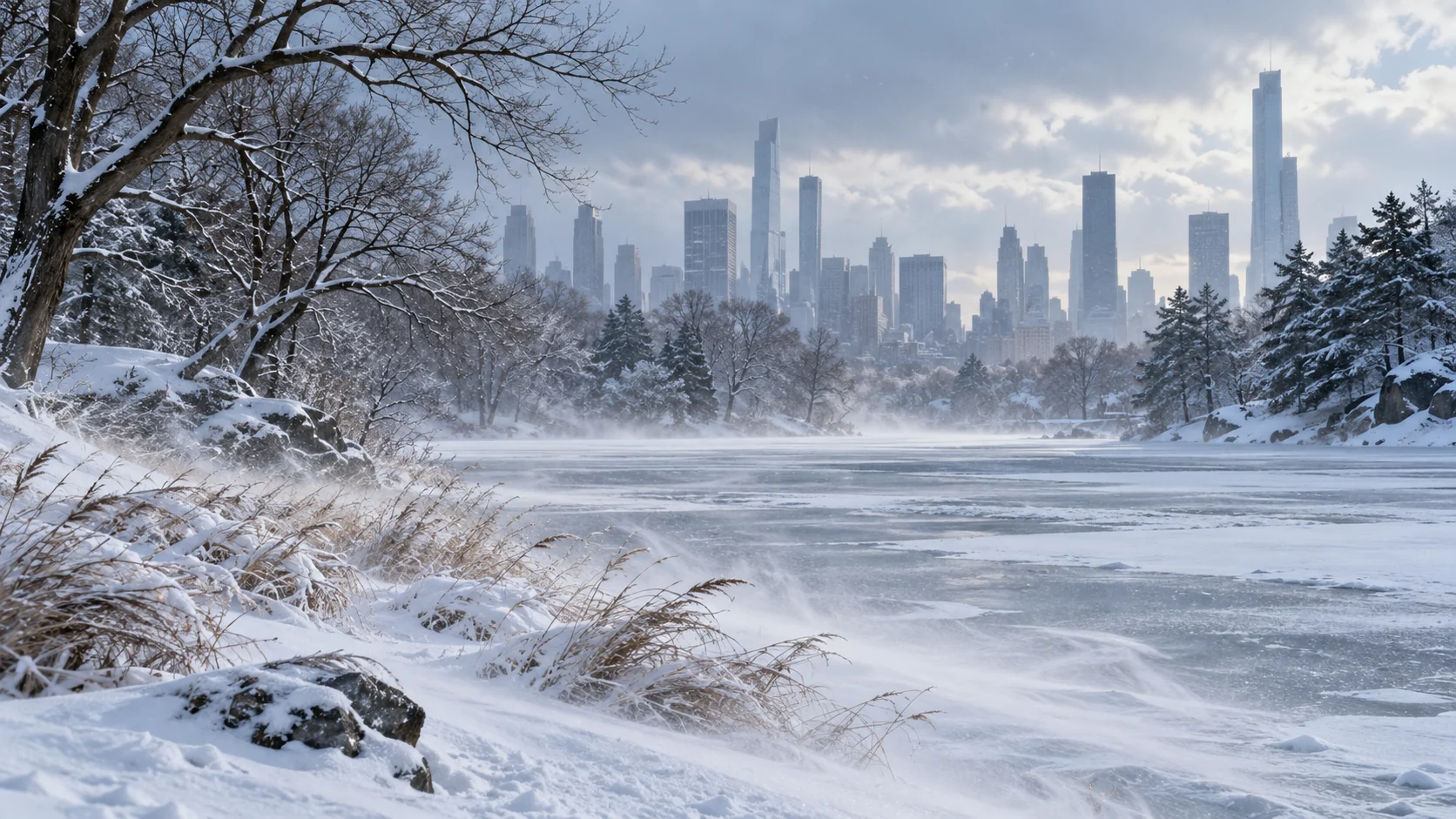
Snow, sand, and water can add exposure, even when the air feels cool.
Daily maximum versus hourly UV
UV generally peaks around solar noon, when the sun is highest in the sky. That is not necessarily 12:00 on your clock: longitude and daylight saving time affect the clock time. Season and latitude also matter.
Check whether a forecast shows the daily maximum or a value for a particular hour. A daily maximum of 8 does not mean the UV Index remains 8 from sunrise to sunset. SkyAndTime’s Weather summary uses a daily maximum; its time scope matters when planning.
Clouds can reduce UV, but a cloudy sky does not block all of it. Cool air and a breeze also do not tell you how much UV reaches your skin. Forecast models account for factors including cloud cover and atmospheric ozone.
UV generally becomes stronger at higher elevations because less atmosphere lies above you. Snow, sand, and water can reflect radiation, adding exposure. A cool mountain walk can therefore call for more protection than its temperature suggests.
How to use a UV forecast
Use a UV forecast to plan protection as well as the timing of an outdoor activity.
Check your location
Look up SkyAndTime Weather before a walk, sports event, or day at the beach.
Combine protection
Use shade, protective clothing, a broad-brimmed hat, UV-blocking sunglasses, and broad-spectrum sunscreen.
Read the time period
A daily maximum is not the value for every hour. Follow sunscreen application and reapplication directions.
Check daylight and heat
Use Sun & Moon for daylight timing and Heat Index for heat. Neither replaces a UV reading.
Frequently asked questions
Is the UV Index a percentage?
No. It is a standardized index of sunburn-producing ultraviolet radiation. UV 8 means very high UV, not an 8% chance of sunburn.
Can UV be high on a cloudy day?
Yes. Some UV passes through clouds, and cloud thickness varies. Check the forecast rather than judging by brightness or air temperature.
Is a daily UV forecast the current reading?
Not necessarily. A daily value often represents the expected maximum. Read the label and time period before comparing it with an hourly value.
Sources & further reading
Official educational references checked September 27, 2026. Examples are illustrative, not live forecasts.